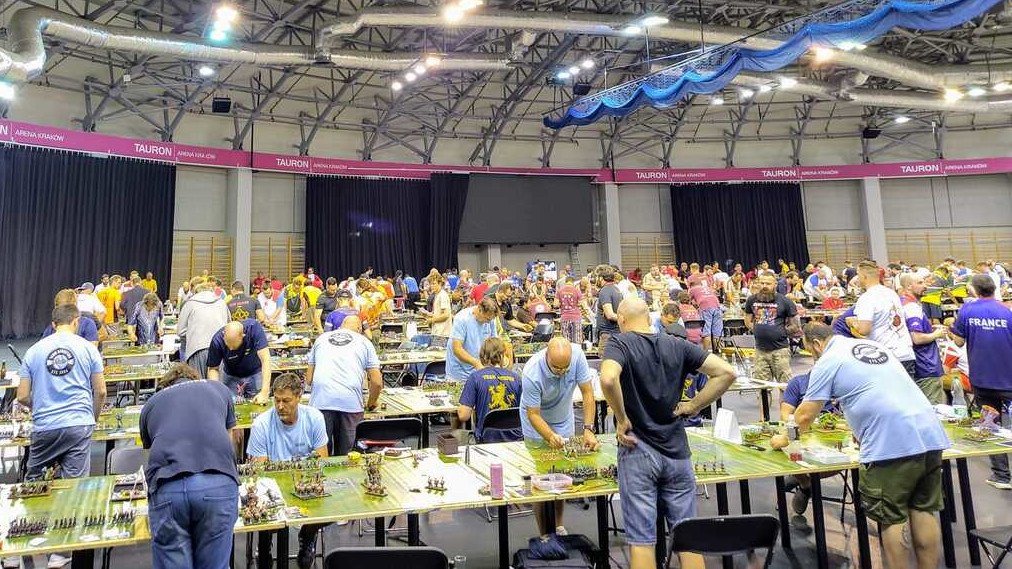
The fantasy genre has never enjoyed such general popularity as it does today. If you are into any fantasy media, you may well be an aspiring commander of The Ninth Age.
The Ninth Age are played with a selection of 16 official armies represented by 28mm tall models on a tabletop with terrain that impacts gameplay.
Battles are fought by rolling dice to determine successes or fails, from archers shooting their bows, to dragons shooting fire or knights charging with lances.
The Ninth Age: Fantasy Battles is for many more than just the ruleset but also a hobby which includes learning to paint miniatures, creating terrain pieces, and maybe even 3D-printing.
Collecting an army
We do not sell or produce miniatures, so you get to pick and choose miniatures from whichever manufacturer you like the most! You could even 3D-print your own army, or use Lego or paper proxies. Using third-party services, you can also play the game online.
While you can buy a fully painted army from a number of talented individuals or buy a full army used, building and painting an army yourself is one of the most rewarding parts of the hobby. Whether you're crafting a regular human soldier, a towering daemon, or a colossal mechanical construct, your skills will grow with practice as you bring your miniatures to life.
Learn to play using our free rulebooks, or use video resources made by the community. Many people love to play games against friends, family, and other members of the Ninth Age community.
The fantasy genre has never enjoyed such general popularity as it does today. If you are into any fantasy media, you may well be an aspiring commander of The Ninth Age.
The Ninth Age are played with a selection of 16 official armies represented by 28mm tall models on a tabletop with terrain that impacts gameplay.
Battles are fought by rolling dice to determine successes or fails, from archers shooting their bows, to dragons shooting fire or knights charging with lances.
The Ninth Age: Fantasy Battles is for many more than just the actual game, but also a hobby which includes learning to paint their models, creating terrain pieces, and maybe even 3D-printing.
Collecting an Army
First, you need to decide which army you want to go for. Even one single army can be quite an investment in time and money, so you should go for the army that sparks your interest the most, instead of focusing on game mechanics. To learn more about the different armies, have a look at the Army page.
The Ninth Age Project does not sell or provide miniatures, so you can choose what types of miniatures you like the best, whether that is a specific vendor, or a mix of vendors, or even creating them yourself using 3D modelling software, if you have the skills. For beginners, you could also consider paper proxies, which you can simply print out. The only requirement is that the miniature base is as specified in the relevant Army Book entry.
That being said, there are services that provides all of these at a cost; you could buy a complete army fully painted with moving trays shipped to your door, you can buy armies in boxes that needs to be assembled and painted, or you could pay a printing service to 3D-print some specific miniatures. There are in other words lots of options available.
If you happen to find the name of a unit in an army book, which you have no idea of what is, or how it should be represented as a miniature, we have a list of options per army.
Hobby
The battlefield
6"x4" (~180x120cm) is the standard size for a game board. Some people are lucky enough to have access to a large kitchen table, table-tennis table or something similar, but for the rest of us it might be necessary to construct a gaming table or board on which to fight, or even the floor. But beware; wherever you set up your game, it might be occupied for three hours or so!
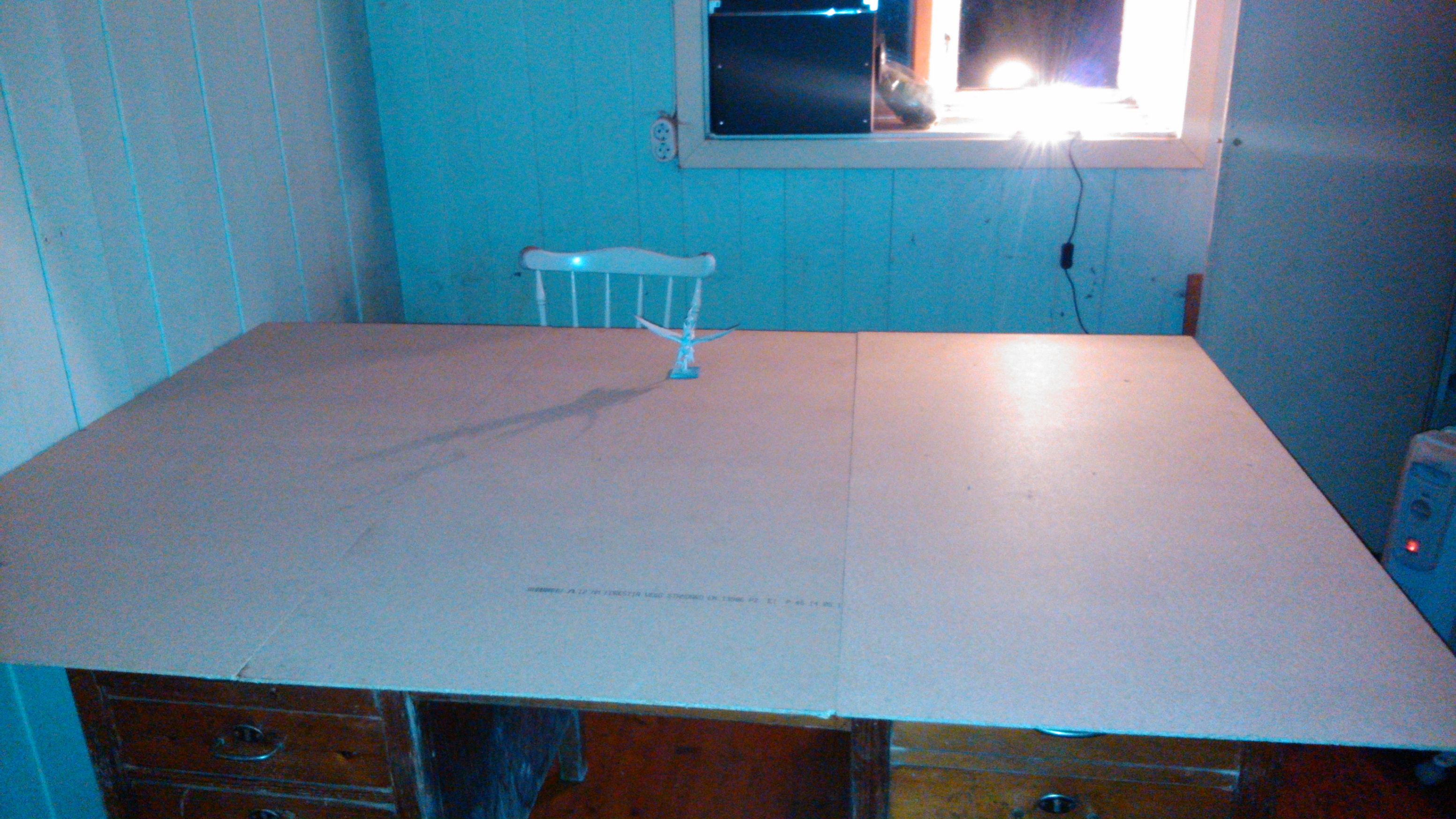
Building a table is easy enough, using fibre board or chip board. It doesn't need much to look better than the floor:
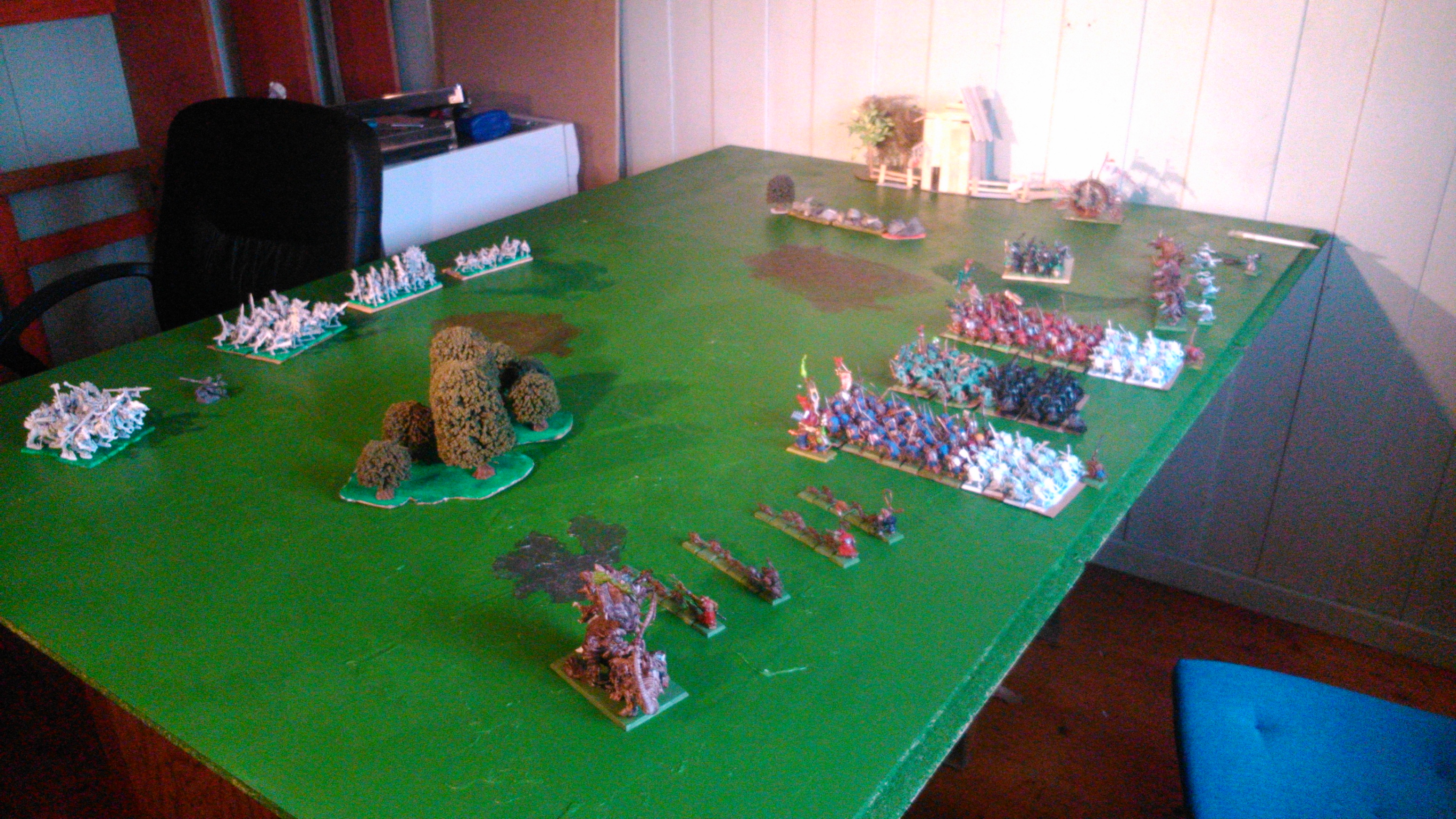
A coat of paint does wonders
Terrain
For all intents an purposes, terrain could be printed out on paper, but thats not very evocative, is it? Terrain can be bought, or you can make your own woods, hills, rivers and buildings to be used in your games. There are loads of resources online, and also books on the subject. Much knowledge can be transferred from the Model Train scene, or other tabletop wargames.
Painting
If you have miniatures at the ready, but most of them are either a grey resin color or an army of white-primed ghosts (see image above), it affects the spectacle of battle. Of course, if you haven't had your first game in yet, you probably want to just assemble something and try out the game and learn the rules, and that is fine! But having a painted army makes all the difference on the battlefield, and the only way to get good is to practice. As with terrain, the resources online are abundant, whether you prefer videos or written articles.
Modelling
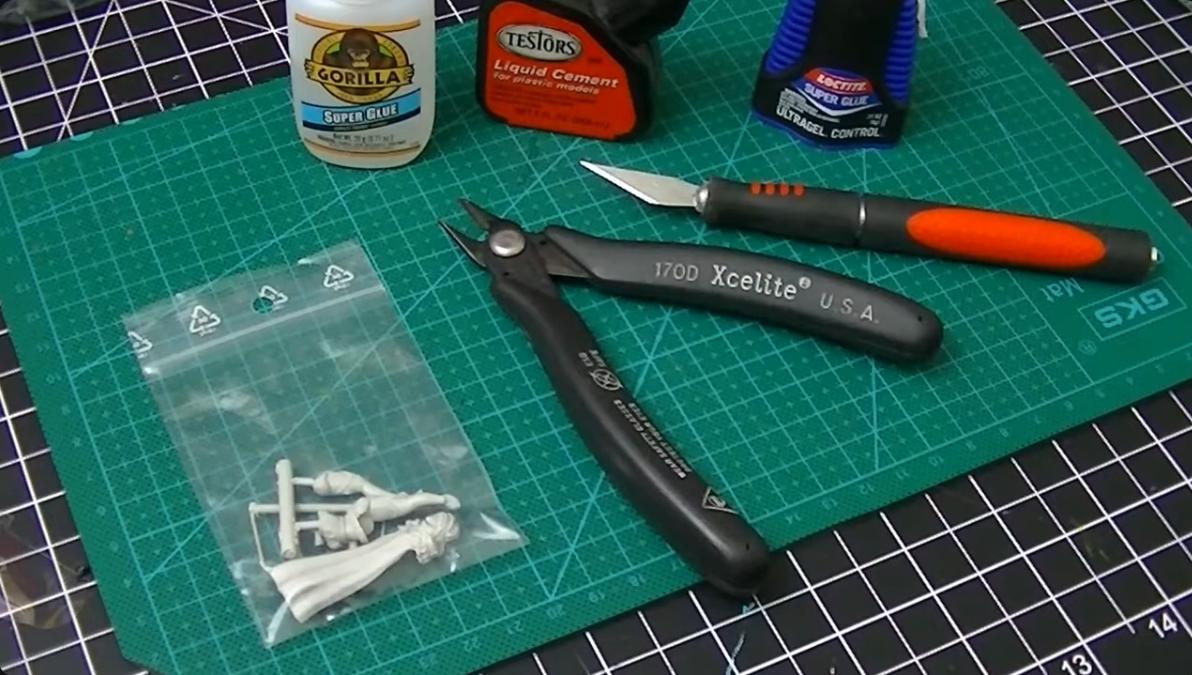
When you are assembling or modifying models, there are some tools that come in handy:
Craft Knife
Pliers
Clippers
Pin vice
Superglue
What you need to play
You will need two armies, and preferably one person to control each army. The quantity of models does not need to be huge in order to get a game in.
A place to play - that could be at your house, your friends house, at a local gaming shop or even at a community center. If nowhere else is available, set up on the floor, and try to complete the game in a single session.
Some terrain. If nothing is available, just improvise by using boks, paper, rocks or whatever can be found.
There are some books that are needed:
The Rulebook contains the main rules of the game.
The "Model Rules" book contains special rules that are used throughout the different armies
The Arcane Compendium which contains Magic Items, and all the spells used in the game, as well as printable cards for the Magic phase.
The Army Book of whichever army you want to play. All of these can be downloaded for free in our download section.
Patience! This game is not simple and takes time both to learn and execute. Have patience for your fellow player, and try having fun even if the battle isn't going your way. But it is the depth of the game that the player base enjoys.
Game equipment; Regular 6-sided dices (also referred to as D6s) are needed. For smaller games, you don't need too many, but when you have a bigger units, having 20-30 dice at hand is not unreasonable. Having a tape measurer for each player is
An army list which details all the units of your army and their point cost. This needs to be calculated for each competing army, to ensure a fair fight in terms of points.
Pen and paper or a tablet for taking notes of casualties and victory points during the game
Your preferred beverage and snacks! For tournament-sized battles, a game may take 2-4 hours, so having enough energy to keep up is necessary.